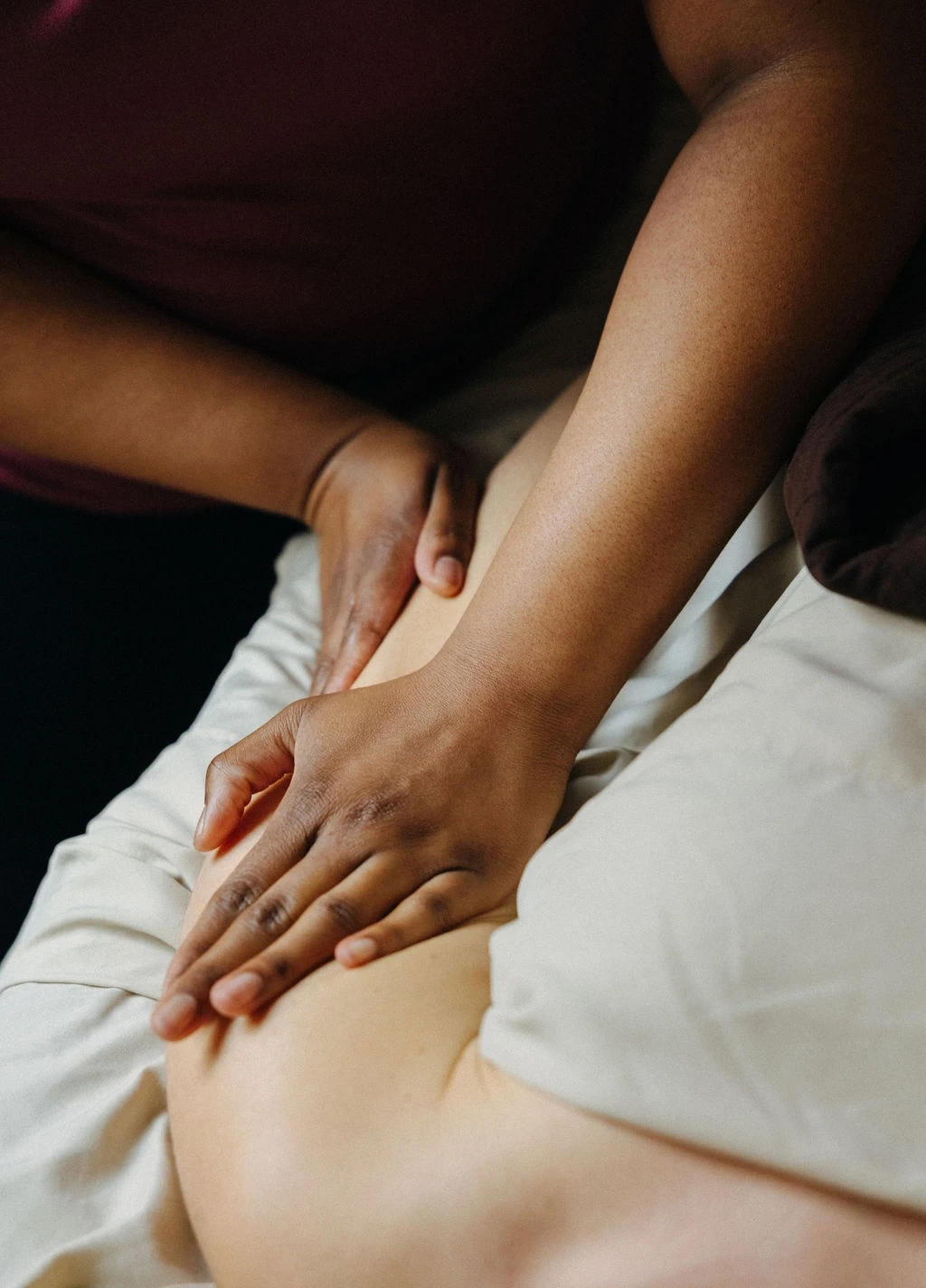
Quick Answer: The main difference between Swedish and deep tissue massage is the technique, pace and focus. Swedish massage uses flowing strokes and adjustable pressure to encourage relaxation, while deep tissue massage uses slower, firmer movements to target specific areas of muscle tension. Swedish is often ideal for first-timers and stress relief, while deep tissue suits those who prefer more focused work on tight muscles.
It’s a question we hear all the time at our front desk on boulevard Saint-Laurent: “Should I get the Swedish or the deep tissue?” The short answer has less to do with how tight you are and more to do with what you want from the next hour. Do you want to switch off for an hour and head home with looser shoulders? Or do you want someone to finally deal with that knot under your shoulder blade that has been with you since last winter?
Here’s how the massage therapists at Espace Nomad explain the difference to clients before a session, minus the jargon.
What is Swedish massage vs deep tissue?
Swedish massage uses long, flowing strokes across the body, with pressure adjusted to what feels good for you. Deep tissue massage slows everything down and works layer by layer on specific areas, using very little oil.
So pressure is only part of the story. A Swedish massage can be firm, and good deep tissue work is not an endurance test. The real differences are the pace, the areas your therapist focuses on and how the treatment feels.
Swedish massage, the reliable classic
At our spa, the Swedish massage is often the first one we recommend when someone is new to massage. . It can be relaxing or therapeutic depending on what you need that day, and your therapist adapts the rhythm and depth of the strokes with you, before and during the session.
On the table, it goes something like this: long gliding strokes with oil to warm the muscles, kneading (the muscle is lifted and rolled, a bit like bread dough), more focused friction wherever things feel stuck, then a return to long strokes to finish.
The steady rhythm helps you settle in, and we’ve had more than a few clients tell us they barely remember the last twenty minutes.
Swedish is a good fit if:
- you’re mostly stressed or tired and want to let go;
- it’s your first massage, or your first in a long while;
- you’re sensitive to pressure;
- you simply need an hour away from your screen.
And don’t worry if you like firmer pressure. Swedish doesn’t have to mean feather-light. You can ask for a little more work around your shoulders without changing the whole session.
Did you know? “Swedish” massage owes a lot to a Dutchman. In the 19th century, Swede Pehr Henrik Ling built a gymnastics system in which massage played a small part, but it was Amsterdam physician Johann Georg Mezger who turned massage into a structured practice, as this essay on physiotherapy history explains. The basic strokes still go by French names: effleurage, pétrissage, friction and tapotement.
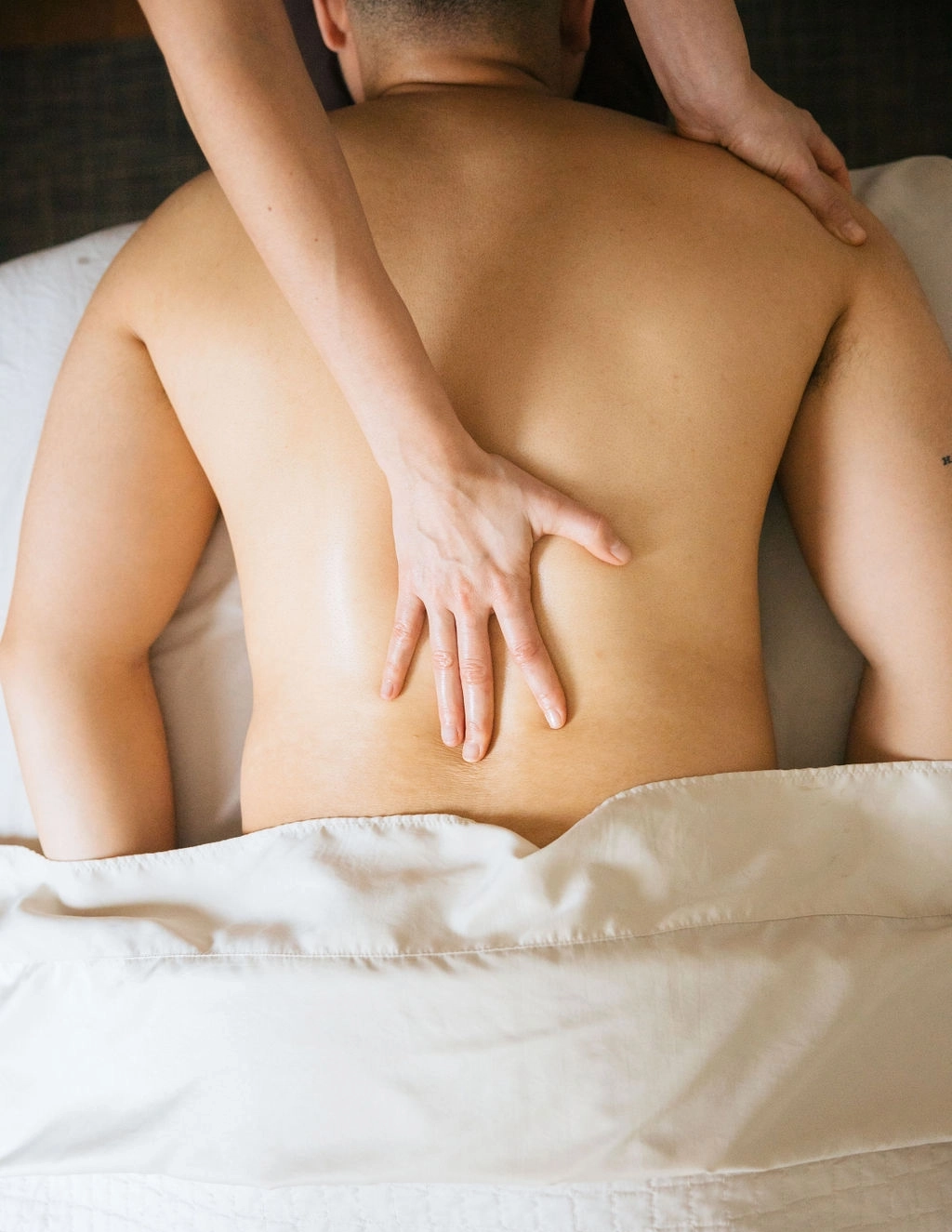
Deep tissue massage, slow and targeted
The deep tissue massage uses slower, more deliberate movements and firm pressure to focus on areas of tension. . It uses very little oil, sometimes none, because your therapist needs to grip the tissue rather than glide over it.
On the table, it feels slower and more local. Your therapist may use a forearm, knuckles or an elbow, work gradually into a tight area, then move a few centimetres along. Several minutes on a single trapezius is not unusual. The feeling often sits somewhere between discomfort and relief, that “oh, right there” you recognize instantly.
Deep tissue is mostly for people who:
- carry chronic tension in the neck, shoulders or lower back;
- spend their days sitting at a computer;
- train regularly (running, cycling, climbing) and want focused attention on tight areas;
- like to feel the work happening and enjoy firm pressure.
A little tenderness can happen after deeper work, especially if you’re not used to that kind of pressure. It should be mild and temporary, like after a good workout
According to the Cleveland Clinic, massage that applies deeper pressure to specific muscle groups is more likely to leave you sore, and drinking water or doing some light stretching afterwards can help. Sharp, radiating or lingering pain is not normal, so speak up.
Deep tissue vs Swedish massage at a glance
| Swedish massage | Deep tissue massage | |
| Pressure | Light to firm, your call | Firm and sustained |
| Pace | Flowing, rhythmic | Slow, methodical |
| Oil | Yes | Very little or none |
| Focus | Full body | Often a few target areas |
| During the session | Calm, sometimes sleepy | Bearable discomfort on knots |
| The next day | Light body, often better sleep | Possible soreness for a day or two |
| Best for | First massage, stress, gifting | Chronic tension, sports recovery |
Which one should you book?
It’s your first massage. Go Swedish. You’ll learn what pressure you like and how your body responds, without starting with the most intense option.
You’re mentally fried. Swedish again, even if you have knots. If you’re already wound up, intense pressure might not be what you’re looking for. You can still ask your therapist to spend extra time on your shoulders.
Your neck complains after eight hours at a screen. Deep tissue, or a Swedish massage where you ask your therapist to focus on the neck and shoulders. Both work; your pressure tolerance decides.
You’re training for the Marathon de Montréal or riding up Mont-Royal all summer. Deep tissue is a great recovery tool, as long as you book it a few days away from race day rather than the night before. Our sports massage, which uses stretching and very little oil, is designed with you in mind too.
You’re weighing Swedish vs deep tissue vs Thai. Thai yoga massage is given in loose clothing on a mat, and there’s also a Thai oil version; both lean heavily on stretching. It’s a different family of massage, ideal if you’d rather move than melt.
The in-between option, the Abyssal Massage
Love pressure but still want to switch off? The Abyssal Massage is an Espace Nomad creation for people who like a good, firm massage. It follows the flowing strokes of Swedish, with oil, but with moderate to strong pressure to release muscle tension. For someone who wants the flow of Swedish with a bit more pressure, it’s often the happy medium we suggest.
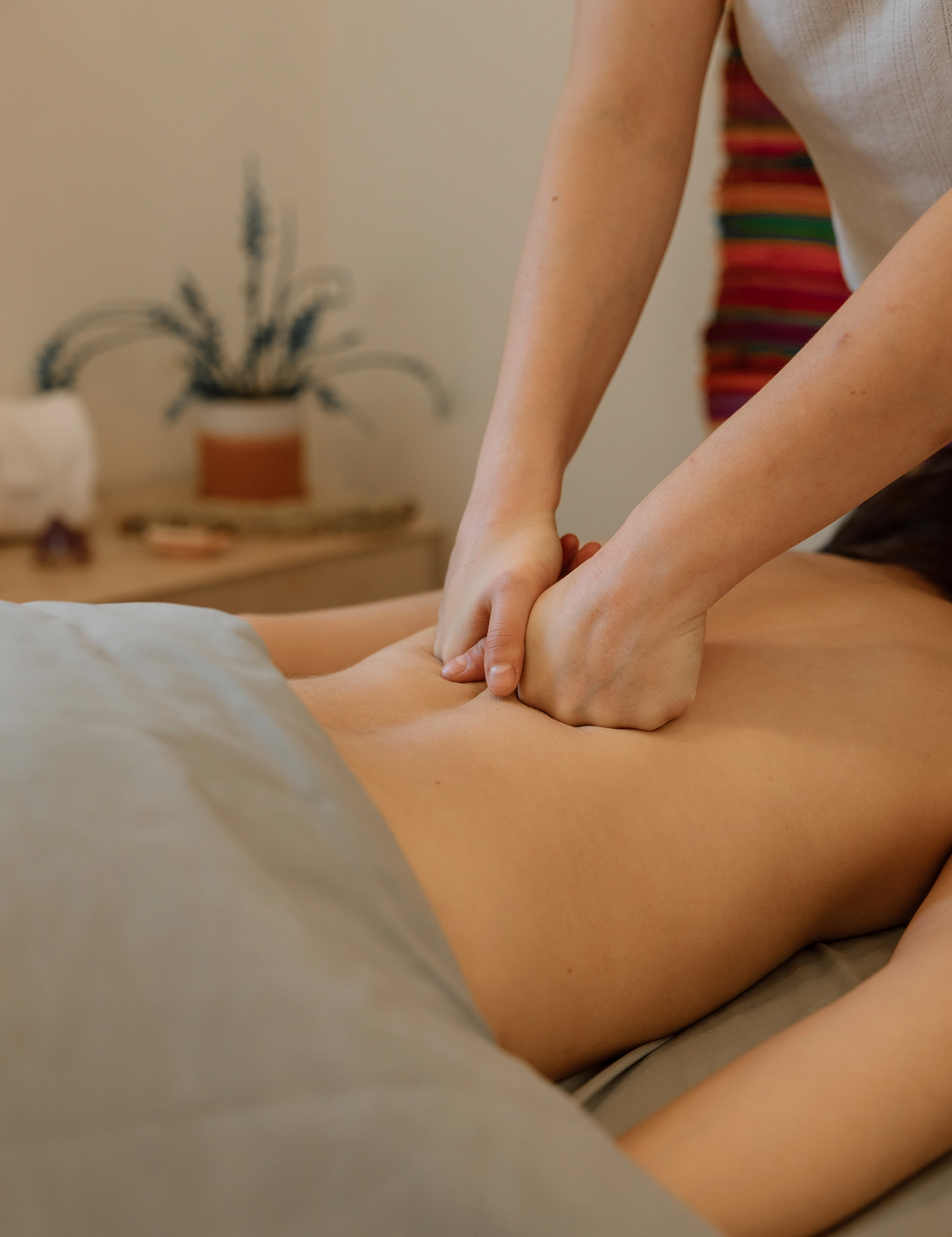
How to talk about pressure with your massage therapist
Harder isn’t always better. You should feel comfortable telling your massage therapist when the pressure is too much, even if you’ve booked deep tissue.
A few tips for being heard on the table:
- Use a scale from 1 to 10. For deep work, choose a level where you can still breathe calmly and relax.
- If you’re holding your breath, clenching your jaw or curling your toes, it’s too much.
- Be specific: “more on my right shoulder, go easy on my calves.”
- Mention any injury, recent surgery, blood thinners, medical condition or pregnancy before the session starts.
- You’re allowed to change your mind halfway through. Your therapist would much rather know.
You don’t have to get the wording perfect, either. “A little lighter on the left, please” tells us plenty. Your massage therapist wants you to feel comfortable speaking up.
Ready to try it?
Swedish to let go, deep tissue for the knot that won’t quit, Abyssal if you want a bit of both. Book your massage in the Mile End, check out Deep Tuesdays if you’re coming on a Tuesday evening, and leave a few minutes for a fresh juice at Café Tranquille on your way out.
Key Takeaways
- Swedish massage uses flowing strokes and adjustable pressure for relaxation, while deep tissue massage focuses on specific areas of muscle tension with slower, firmer techniques.
- Swedish massage is often a good choice for first-time clients, people dealing with stress and anyone who prefers a gentler experience.
- Deep tissue massage may suit people with persistent muscle tension, desk-related stiffness or tight areas from regular physical activity.
- Both massage styles can be adjusted to your comfort level, and deep tissue work should never cause sharp pain or excessive discomfort.
- Book a Swedish, deep tissue or Abyssal Massage at Espace Nomad in Montreal’s Mile End to find the treatment that best suits your needs.
FAQ
Frequently Asked Questions
Does deep tissue massage hurt?
Deep tissue massage can feel intense, especially around very tight muscles, but it shouldn’t cause sharp pain or make you hold your breath. Tell your massage therapist right away if the pressure is too much. You can always ask for less.
Which massage is best for a first time?
Swedish massage is usually a good starting point for someone booking their first massage. The pressure is adjustable, the strokes are flowing, and you can tell your therapist what feels comfortable throughout the session.
Is my massage covered by insurance?
Many of our massage therapists can issue insurance receipts, but coverage depends on your plan. Massage therapy isn’t governed by a professional order in Quebec; massage therapists belong to recognized associations such as the Fédération québécoise des massothérapeutes. If you’d like a session with a seasoned therapist, the High Standards Massage is given by massage therapists with more than 1,000 hours of training or equivalent experience. Always check with your insurer before booking.
Can I get a deep tissue massage while pregnant?
At Espace Nomad, we recommend our prenatal massage rather than deep tissue massage during pregnancy. It’s offered from 13 weeks and adapted for comfort. Check with your doctor or midwife before booking.
How long does soreness last after a massage?
Soreness after a massage usually lasts a day or two. Drink water, move gently and treat yourself to a warm bath that evening. Our bath and body collection has plenty to keep the calm going at home.
Share